

Duo Security on NetBird Cloud
Updated
You can use Duo Security as your Identity Provider with NetBird, but it will require some additional configuration steps. Duo Security is a cloud-based security platform that provides secure access through single sign-on (SSO), multi-factor authentication (MFA), and device trust. Duo offers comprehensive identity verification and access policies to protect applications and data.
Support for OIDC-compliant IdPs is available on the Team plan and higher. The Free plan supports Google, Microsoft, and social logins. Self-hosted deployments support OIDC-compliant IdPs in both the open source Community Edition and the Enterprise Commercial License. See self-hosted identity providers.
Prerequisites
Before you start using Duo Single Sign-On, make sure to meet all the requirements described below:
- A Duo Admin with the Owner, Administrator, or Application Manager role
Step 1: Create a new OIDC Application
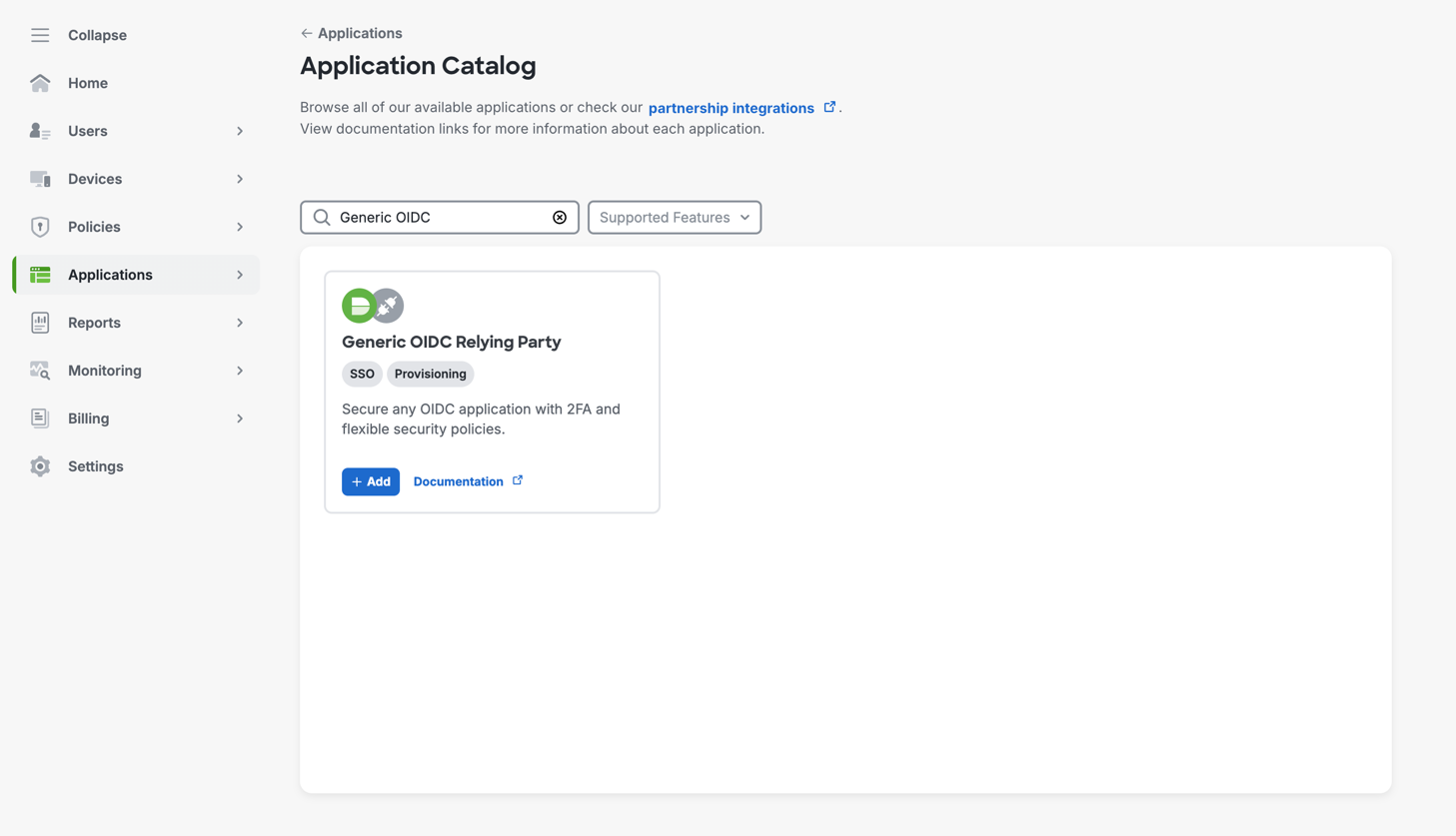
Log in to the Duo Admin Panel. Navigate to Applications in the left sidebar, then click Applications. Click + Add Application which will open the Application Catalog. Search for Generic OIDC, then click + Add next to it.
Step 2: Configure Basic Settings
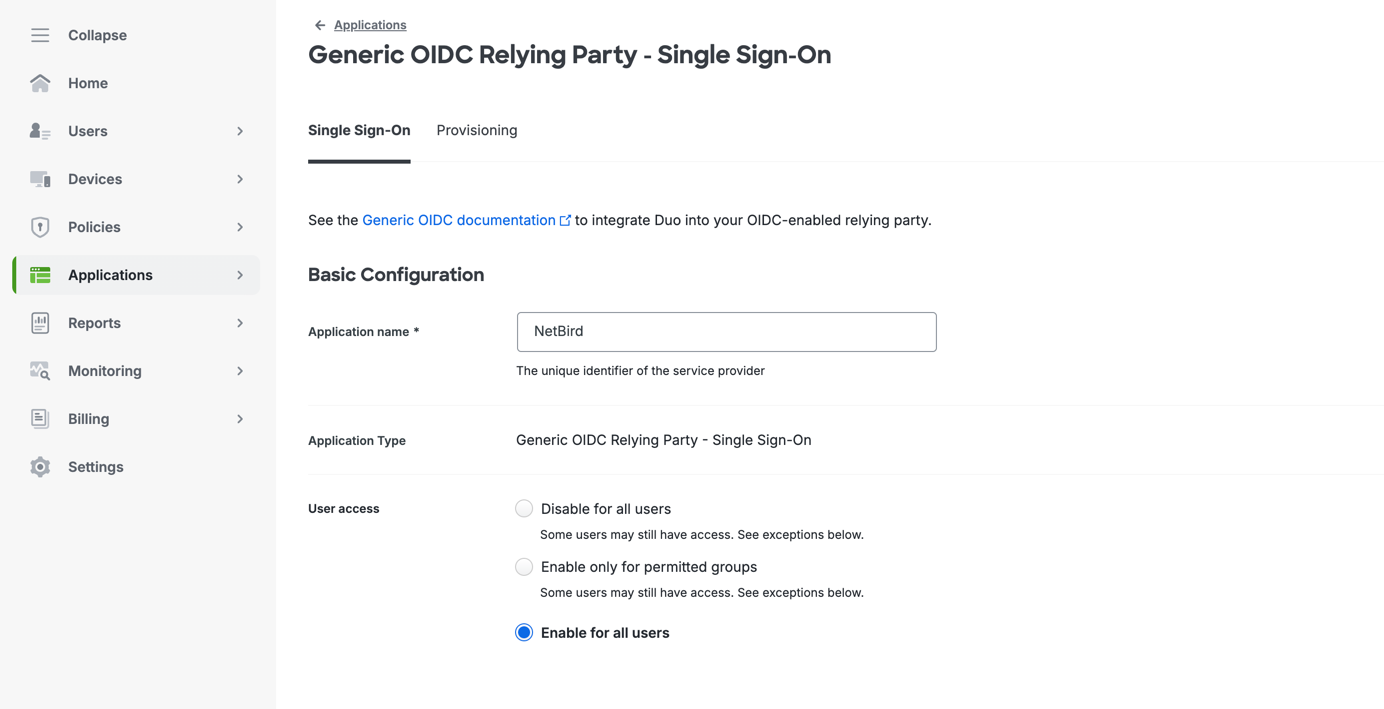
Configure the Basic Configuration section with the following settings:
- Application name: NetBird
- Application Type: Generic OIDC Relying Party - Single Sign-On
- User access:
Enable for all users(if applicable to all users) orEnable only for permitted groups(for fine-grained access control)
Step 3: Configure Relying Party Settings
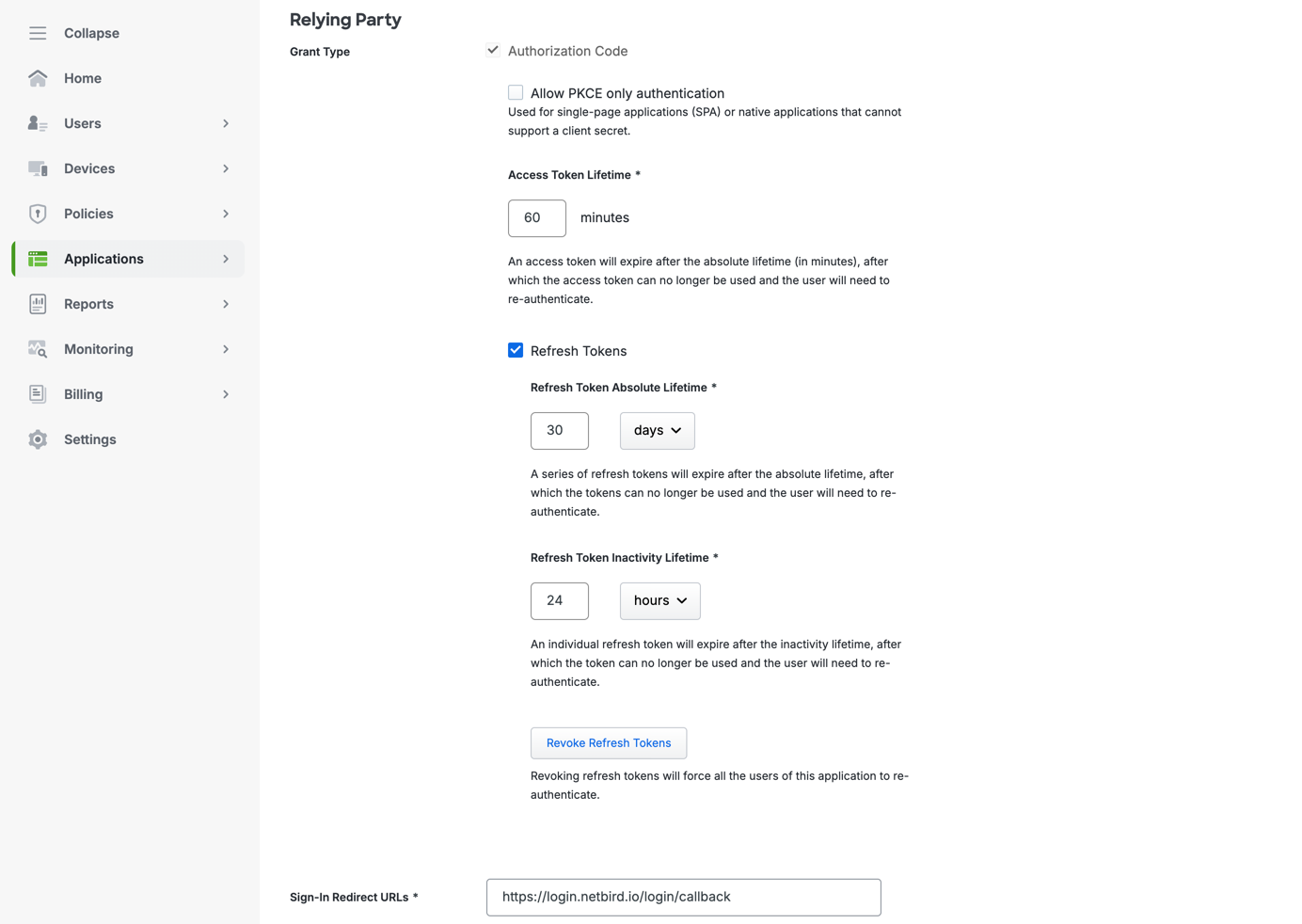
Configure the Relying Party section with the following settings:
- Grant Type: Authorization Code, Refresh Tokens
- Sign-In Redirect URLs:
https://login.netbird.io/login/callback
Step 4: Configure OIDC Response
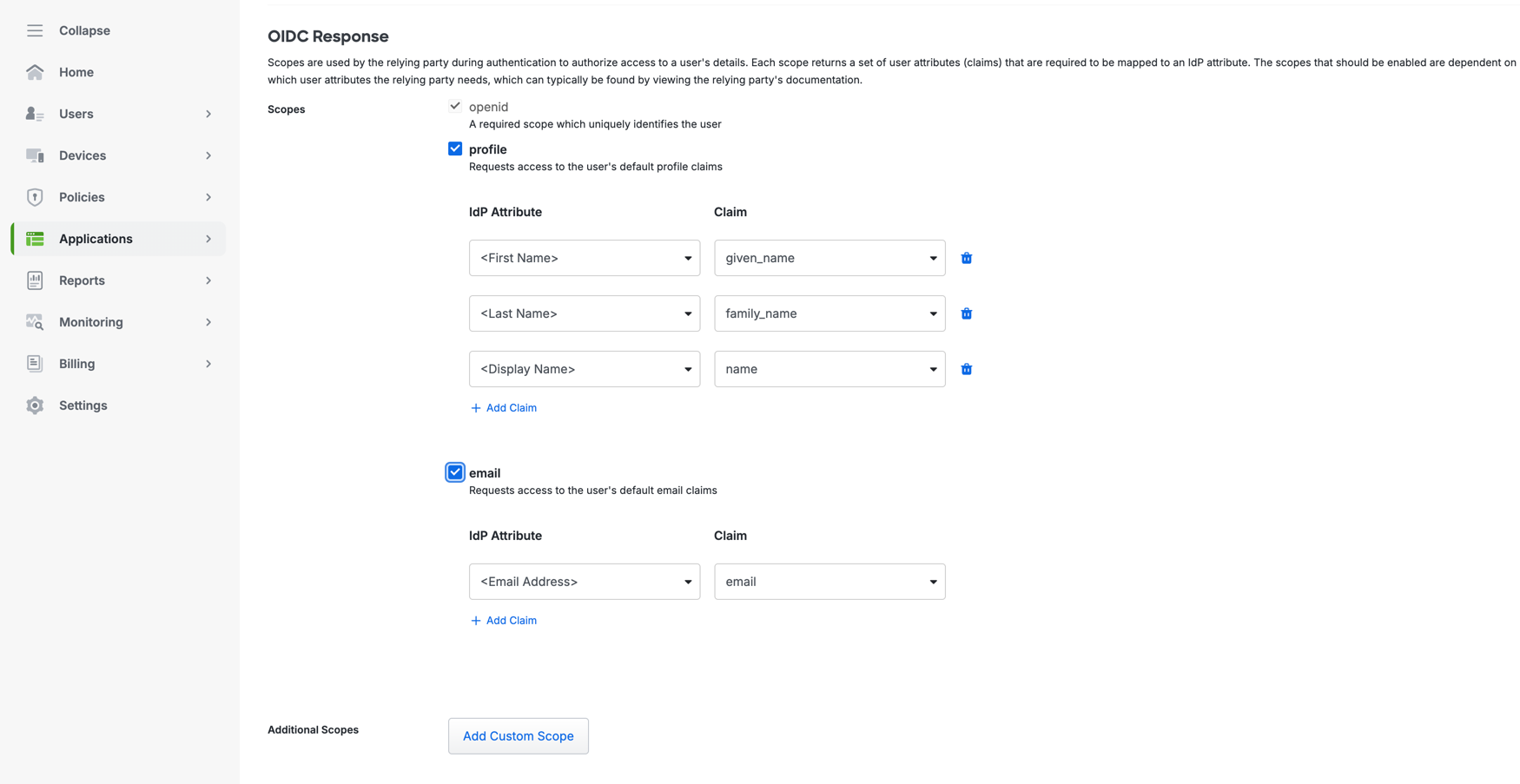
Configure the OIDC Response section with the following scopes:
- Scopes: openid, profile, email
Click Save to complete the application configuration.
Step 5: Share Information with NetBird Support
From the application metadata, copy the Client ID, Client Secret, and Discovery URL. Share the following information with the NetBird support team at support@netbird.io:
- Client ID
- Client Secret
- Discovery URL
- Email domains for your users
We recommend using a secure channel to share the Client Secret. You can send a separate email and use a secret sharing service like: